 Add to Chrome
 Add to Firefox
 Add to Edge
AI tutoring can safely and effectively support students: An exploratory RCT in UK classrooms
Dec 29, 2025
One-to-one tutoring is widely considered the gold standard for personalized education, yet it remains prohibitively expensive to scale. To evaluate whether generative AI might help expand access to this resource, we conducted an exploratory randomized controlled trial (RCT) with $N = 165$ students across five UK secondary schools. We integrated LearnLM -- a generative AI model fine-tuned for pedagogy -- into chat-based tutoring sessions on the Eedi mathematics platform. In the RCT, expert tutors directly supervised LearnLM, with the remit to revise each message it drafted until they would be satisfied sending it themselves. LearnLM proved to be a reliable source of pedagogical instruction, with supervising tutors approving 76.4% of its drafted messages making zero or minimal edits (i.e., changing only one or two characters). This translated into effective tutoring support: students guided by LearnLM performed at least as well as students chatting with human tutors on each learning outcome we measured. In fact, students who received support from LearnLM were 5.5 percentage points more likely to solve novel problems on subsequent topics (with a success rate of 66.2%) than those who received tutoring from human tutors alone (rate of 60.7%). In interviews, tutors highlighted LearnLM's strength at drafting Socratic questions that encouraged deeper reflection from students, with multiple tutors even reporting that they learned new pedagogical practices from the model. Overall, our results suggest that pedagogically fine-tuned AI tutoring systems may play a promising role in delivering effective, individualized learning support at scale.

NeurIPS Competition Instructions and Guide: Causal Insights for Learning Paths in Education
Aug 31, 2022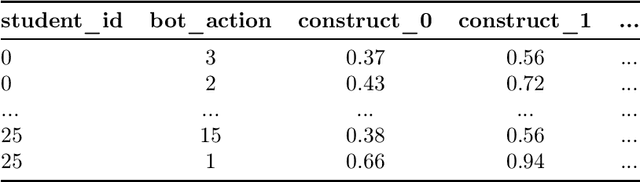
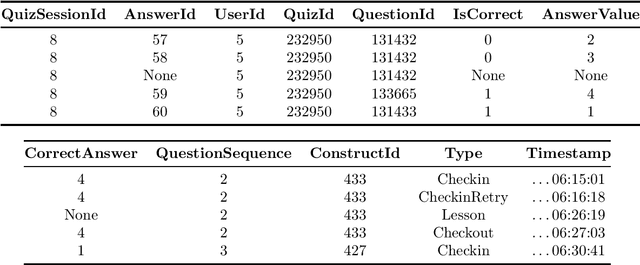

In this competition, participants will address two fundamental causal challenges in machine learning in the context of education using time-series data. The first is to identify the causal relationships between different constructs, where a construct is defined as the smallest element of learning. The second challenge is to predict the impact of learning one construct on the ability to answer questions on other constructs. Addressing these challenges will enable optimisation of students' knowledge acquisition, which can be deployed in a real edtech solution impacting millions of students. Participants will run these tasks in an idealised environment with synthetic data and a real-world scenario with evaluation data collected from a series of A/B tests.
Diagnostic Questions:The NeurIPS 2020 Education Challenge
Aug 03, 2020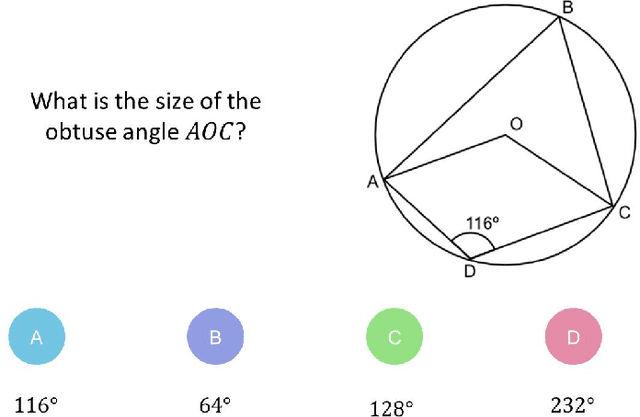

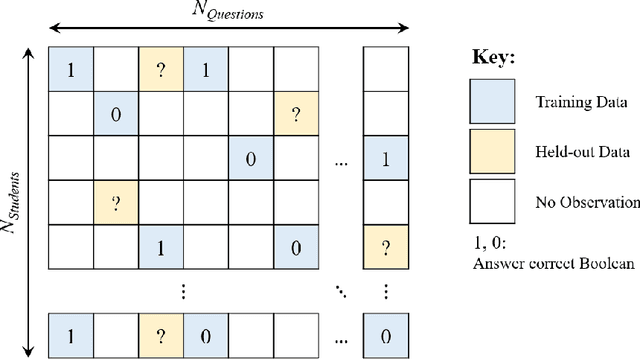
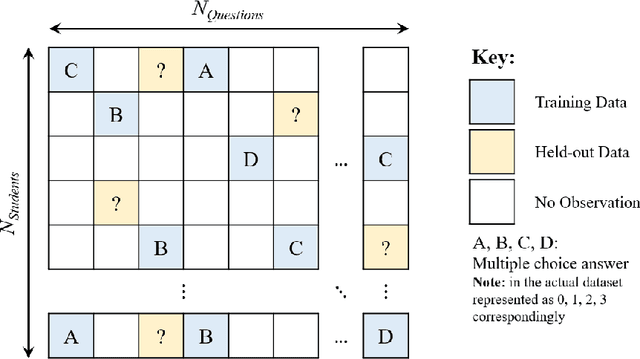
Digital technologies are becoming increasingly prevalent in education, enabling personalized, high quality education resources to be accessible by students across the world. Importantly, among these resources are diagnostic questions: the answers that the students give to these questions reveal key information about the specific nature of misconceptions that the students may hold. Analyzing the massive quantities of data stemming from students' interactions with these diagnostic questions can help us more accurately understand the students' learning status and thus allow us to automate learning curriculum recommendations. In this competition, participants will focus on the students' answer records to these multiple-choice diagnostic questions, with the aim of 1) accurately predicting which answers the students provide; 2) accurately predicting which questions have high quality; and 3) determining a personalized sequence of questions for each student that best predicts the student's answers. These tasks closely mimic the goals of a real-world educational platform and are highly representative of the educational challenges faced today. We provide over 20 million examples of students' answers to mathematics questions from Eedi, a leading educational platform which thousands of students interact with daily around the globe. Participants to this competition have a chance to make a lasting, real-world impact on the quality of personalized education for millions of students across the world.